Pose-posterior grasp planning
Robot grasps planned on where an object could be, not on one pose estimate.
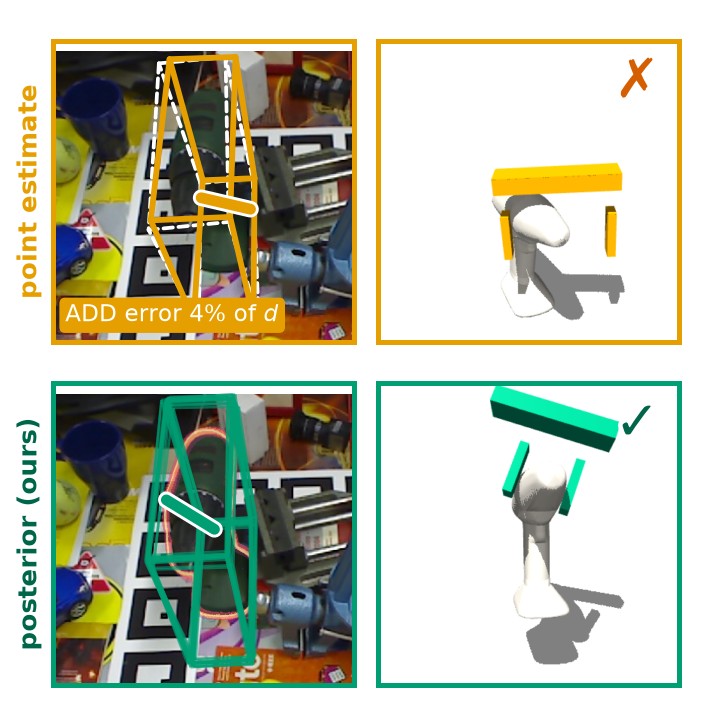
A pose that passes the accuracy test can still drop the object. Planning on a pose posterior lifts it.
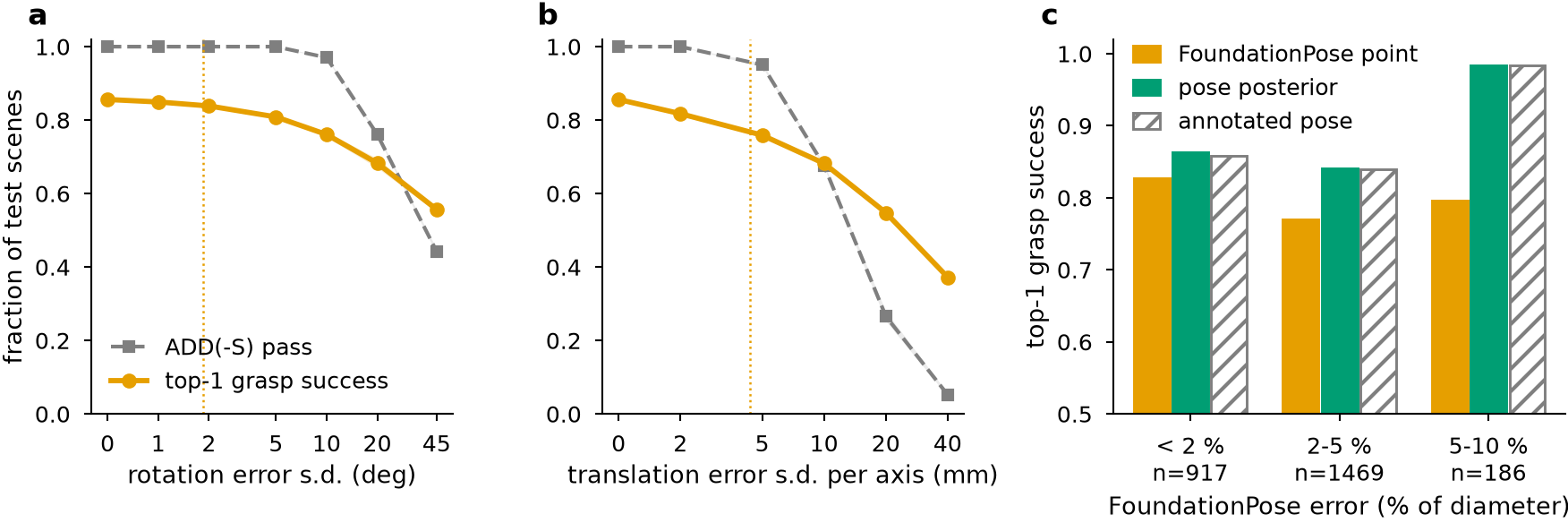
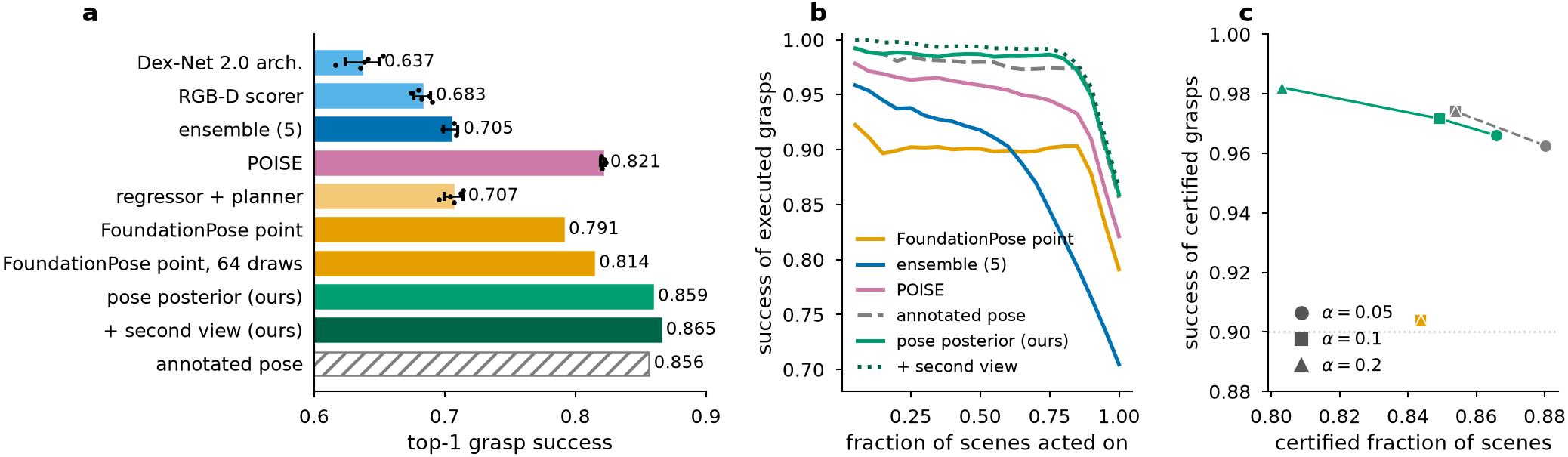
Top-1 grasp success 0.791 to 0.859, level with the annotated pose (0.856).
Small errors, lost grasps
0.984
success where the estimate is off by 5 to 10% of the object's diameter, against 0.796 on the point estimate
0.972
of certified grasps succeed, against 0.904 when planning on the point estimate
Unseen clutter
LM-O test frames, never used for tuning. Over all 1,474 objects the posterior grasp lifts 0.750, the point-estimate grasp 0.683.
One pose, many poses
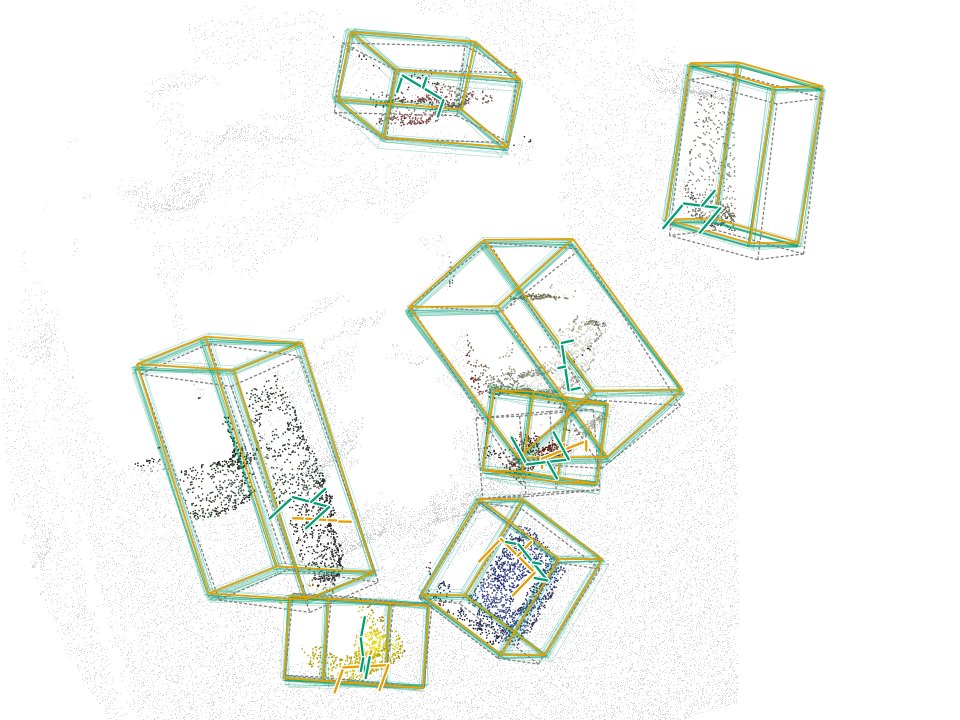
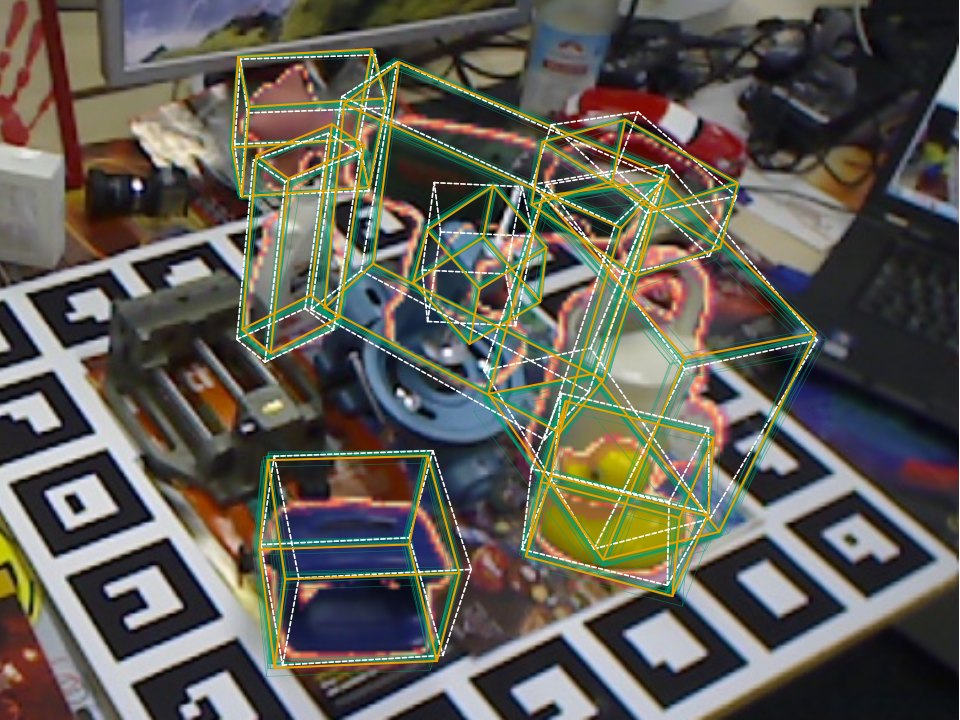
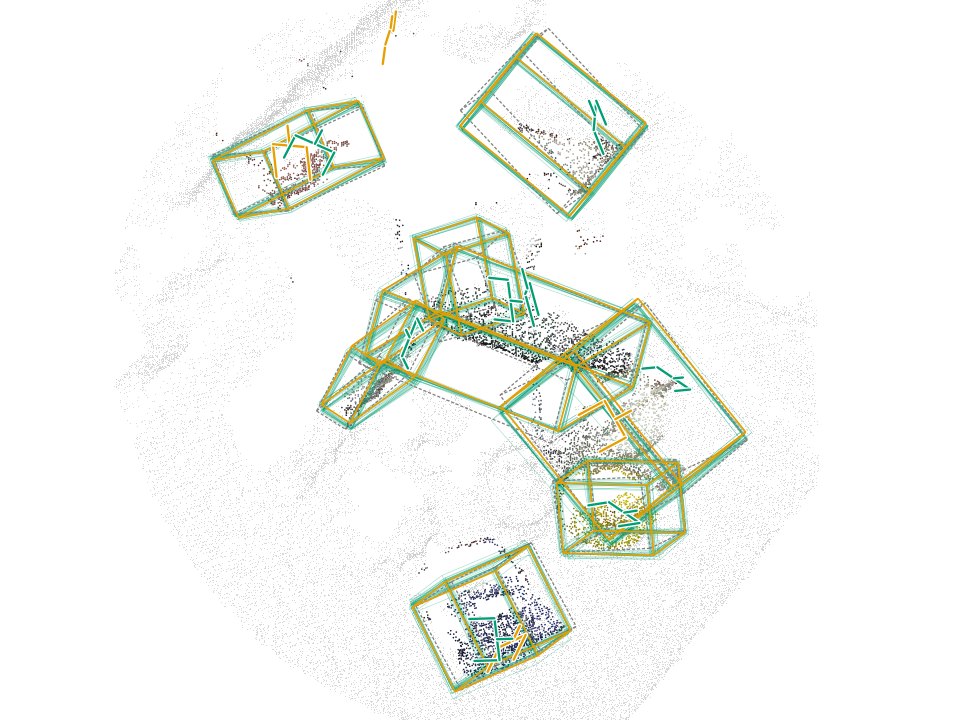
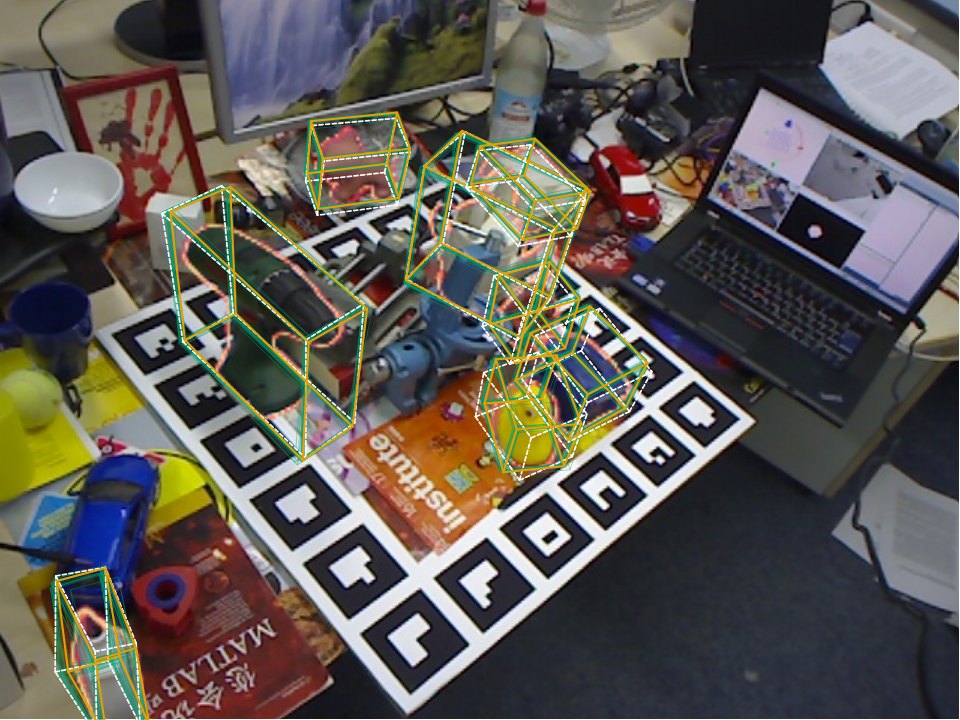
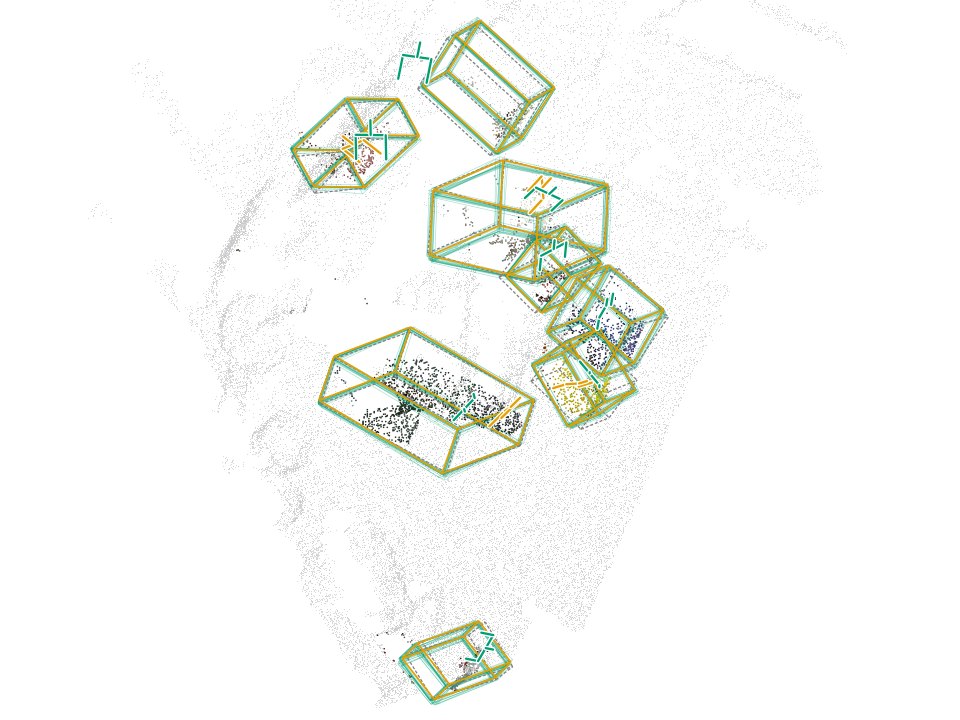
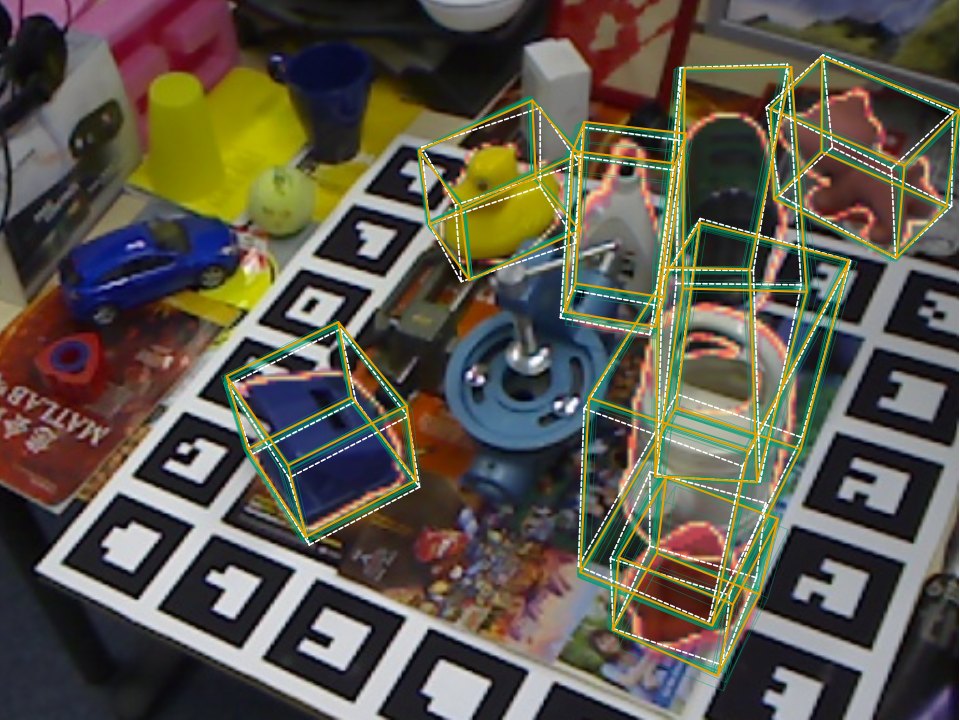
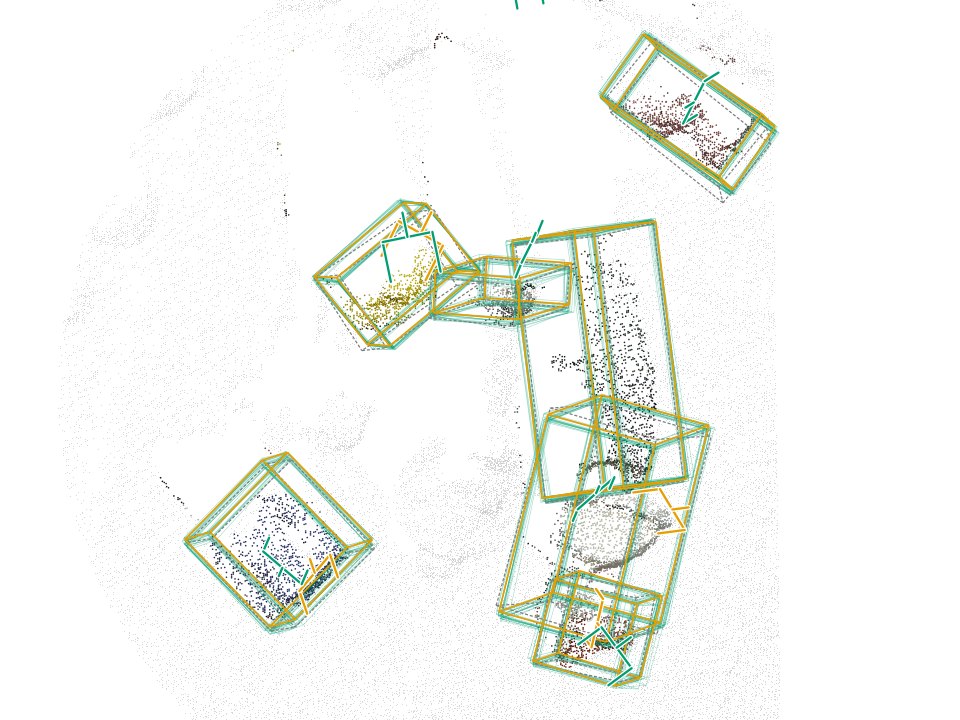
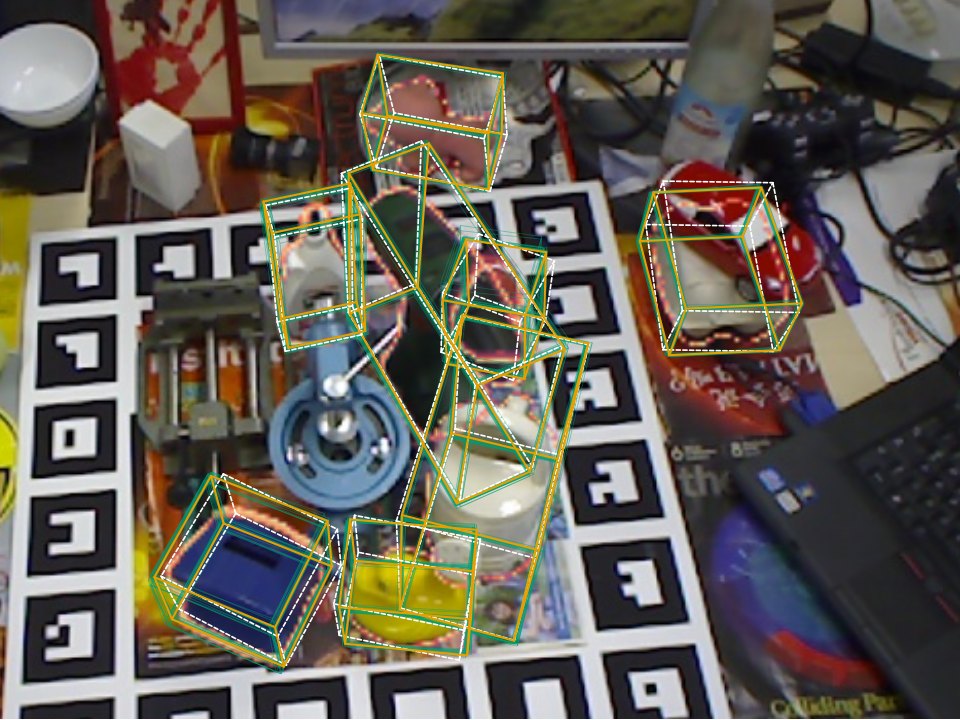
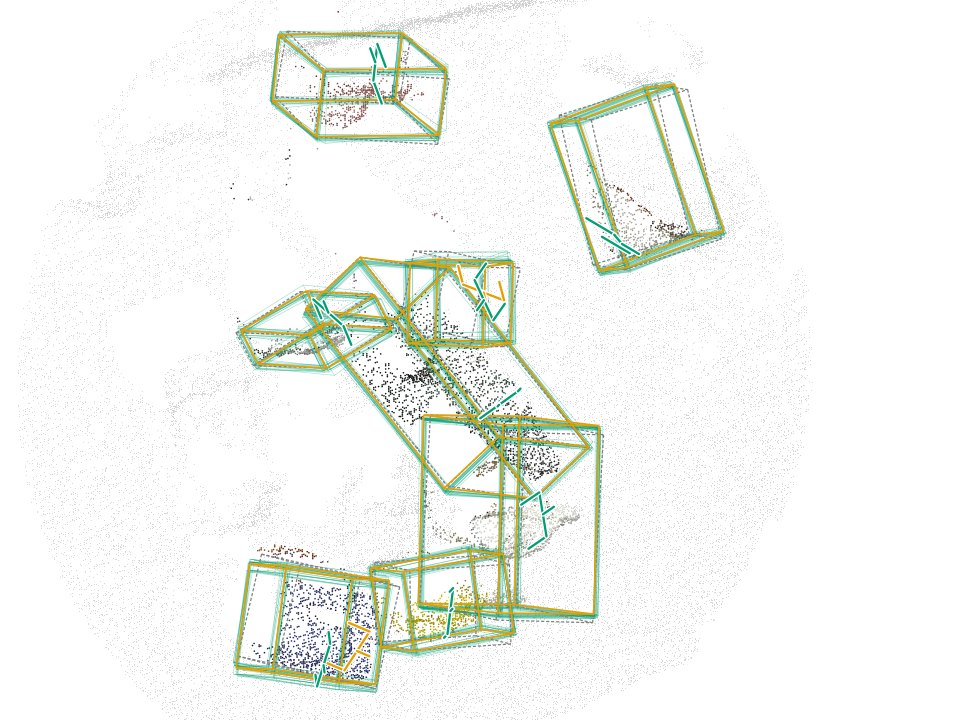
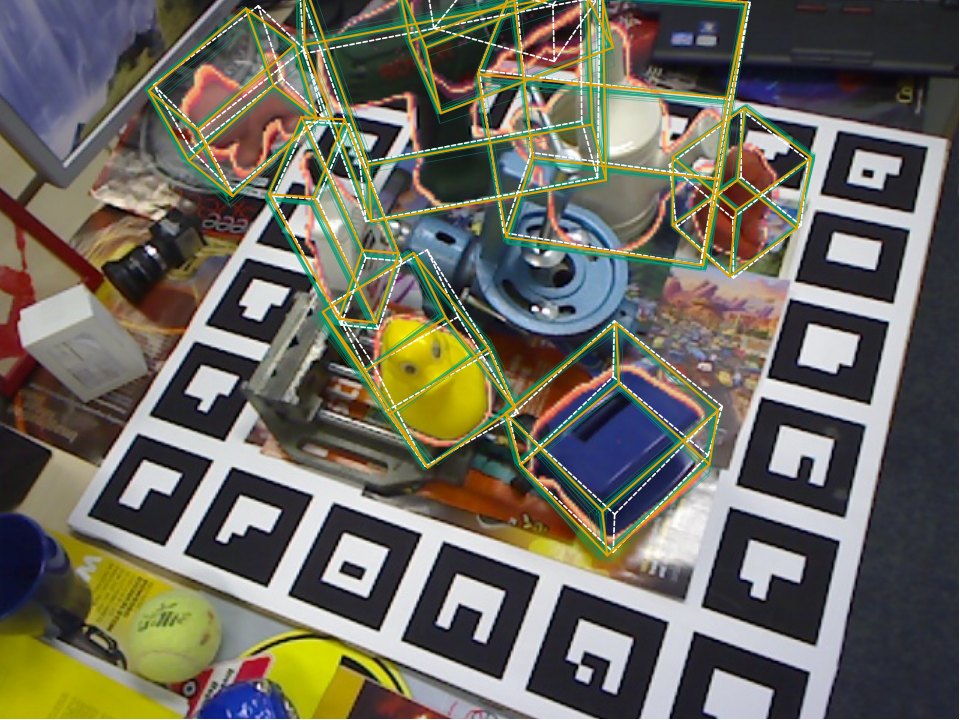
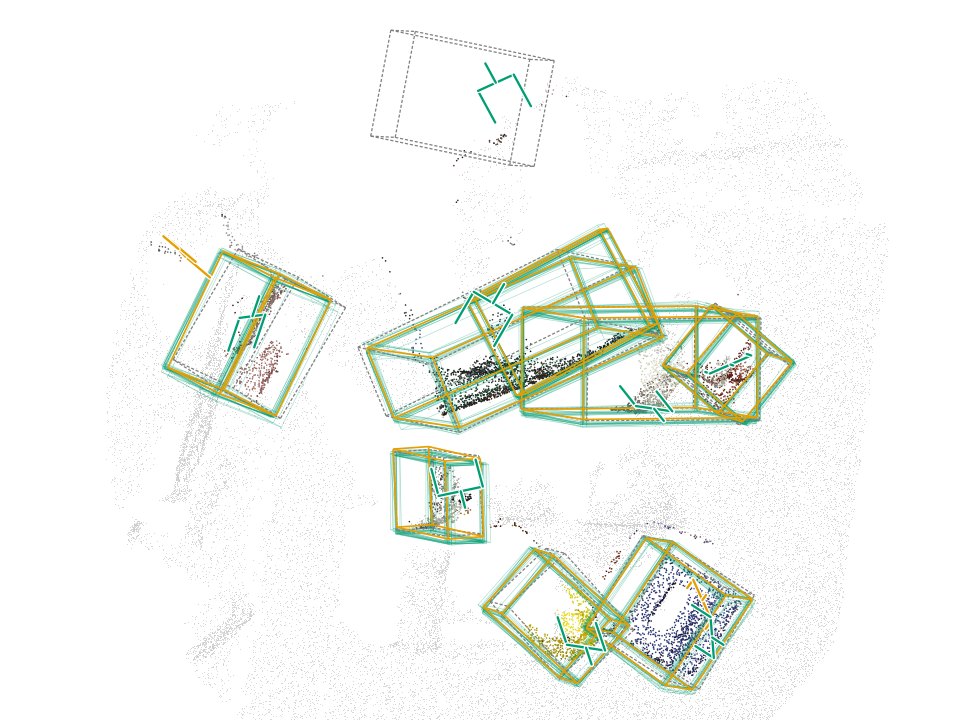
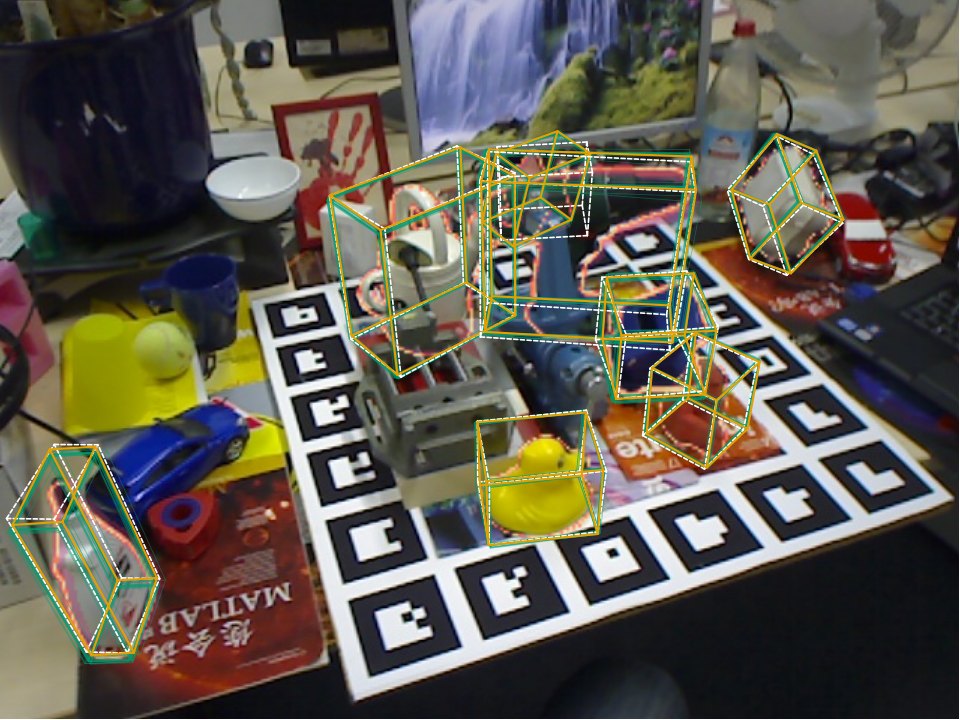
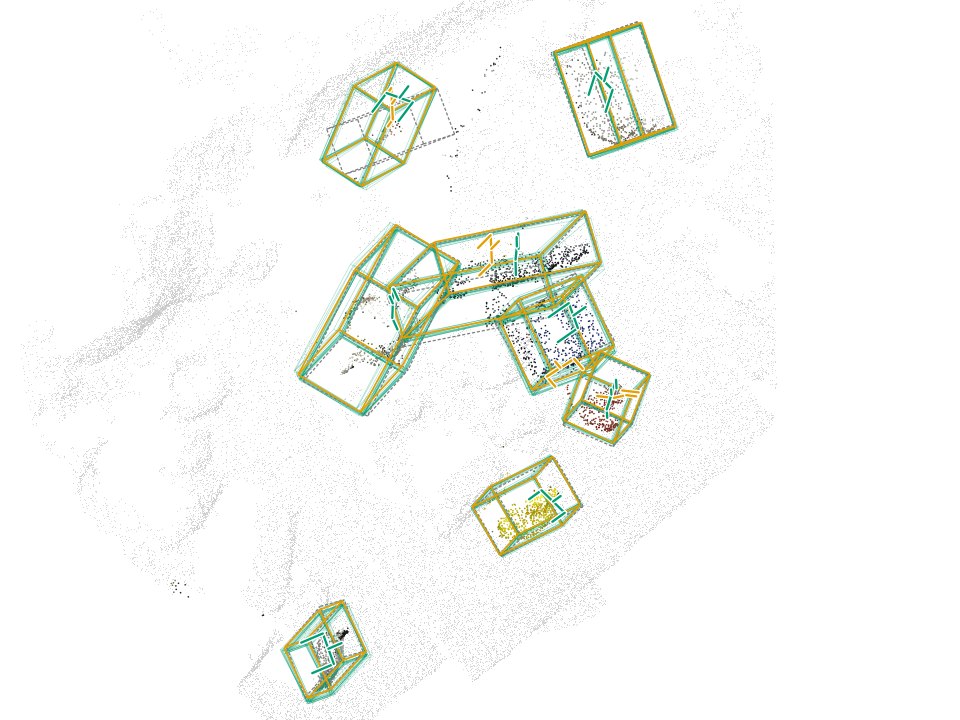
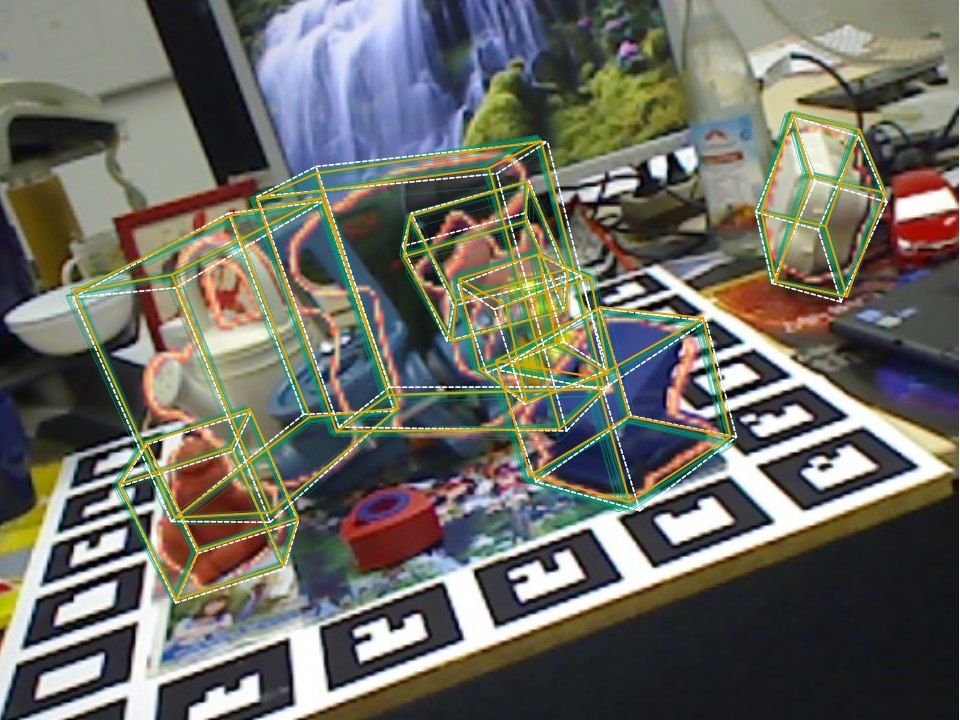
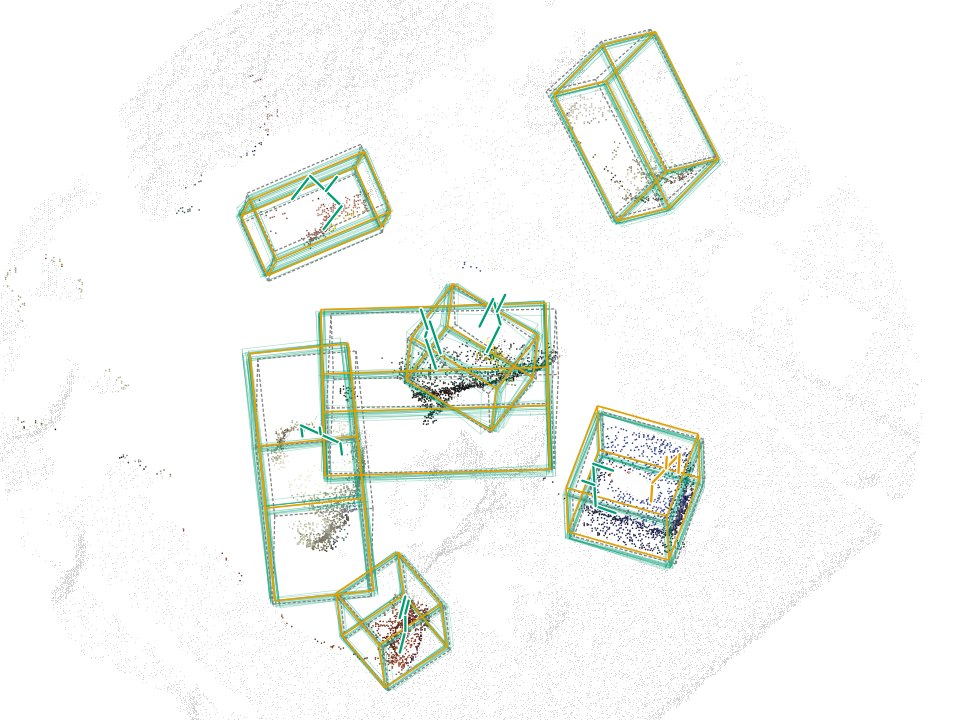
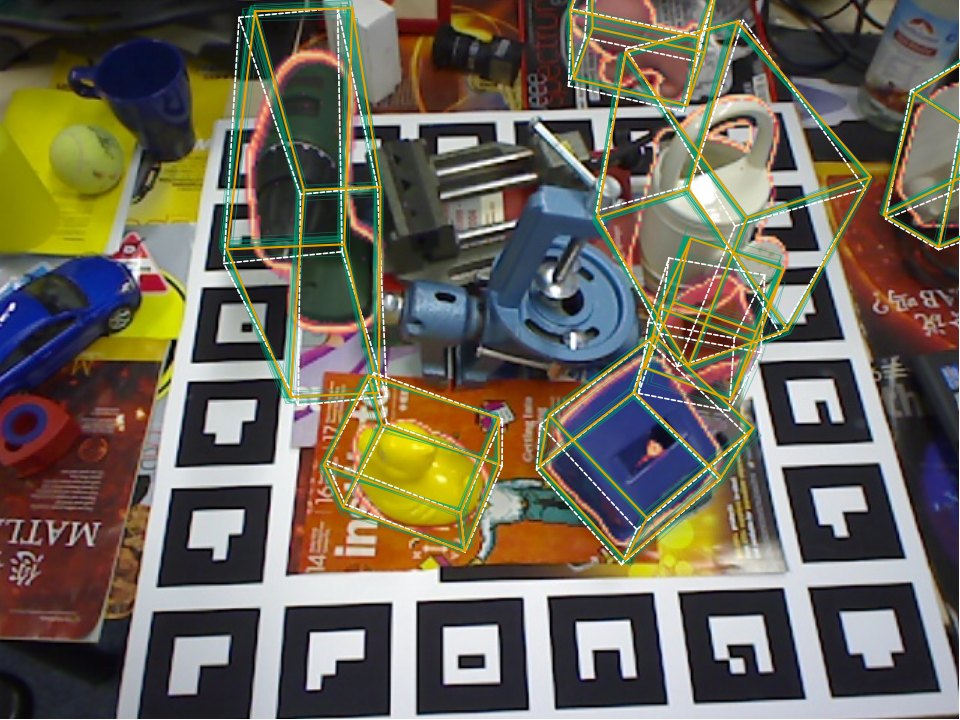
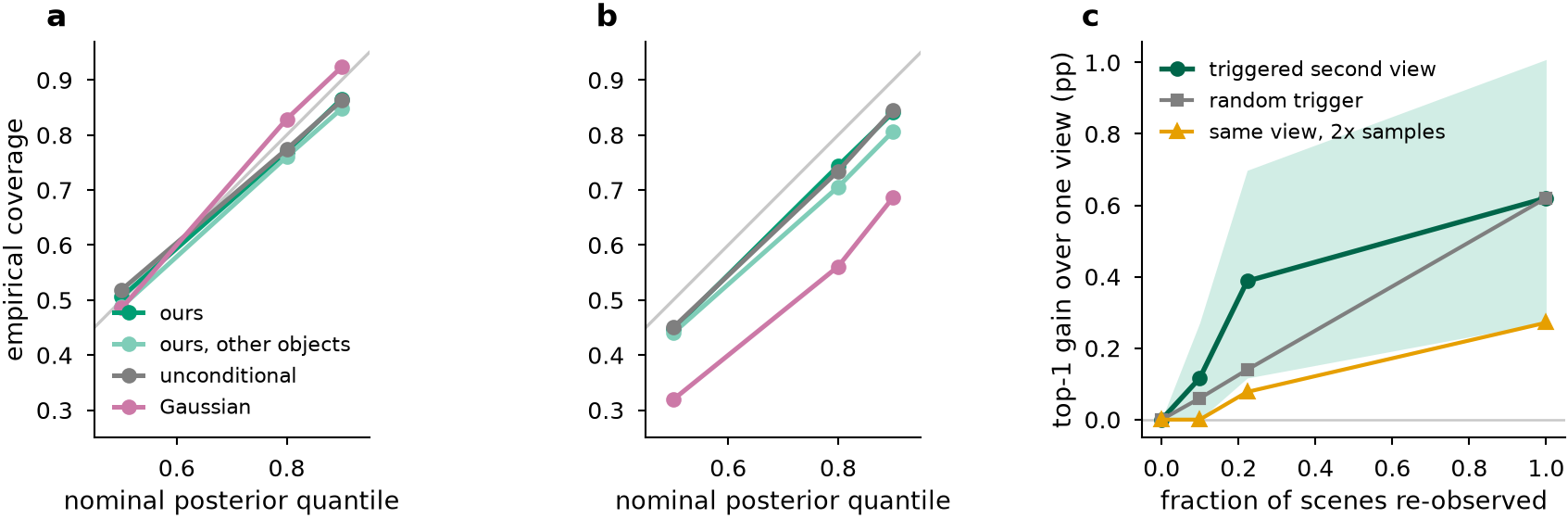
The estimator stays frozen. Its own measured errors become the uncertainty. Open the full figure
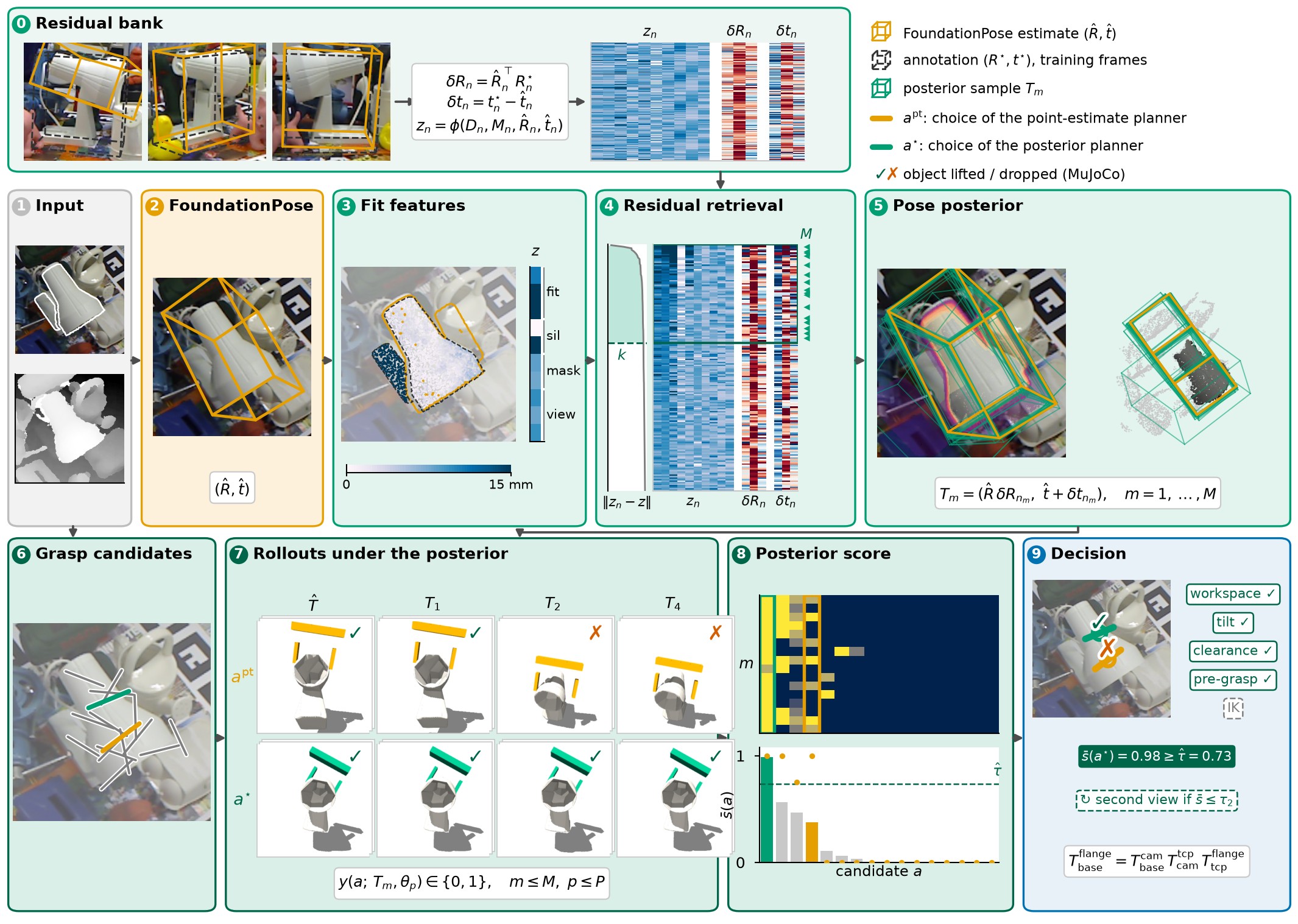
Estimate
FoundationPose returns one pose and no uncertainty.
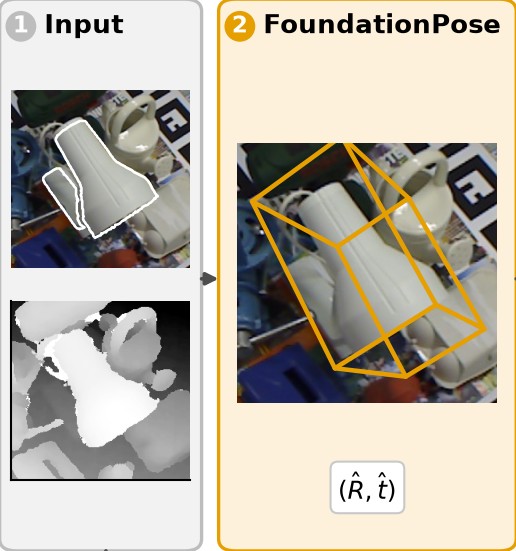
Residual bank
Its errors on annotated training frames, kept with fit features.

Retrieve
Training frames whose fit looks alike lend their errors.
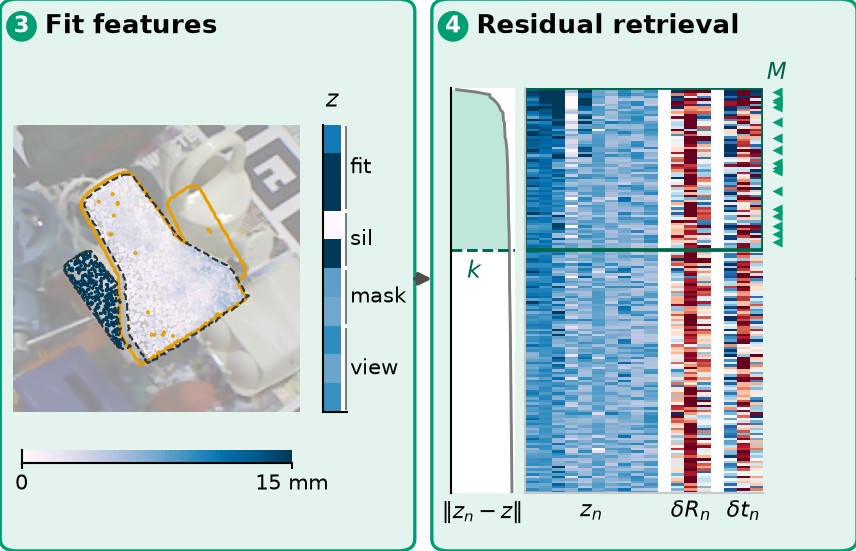
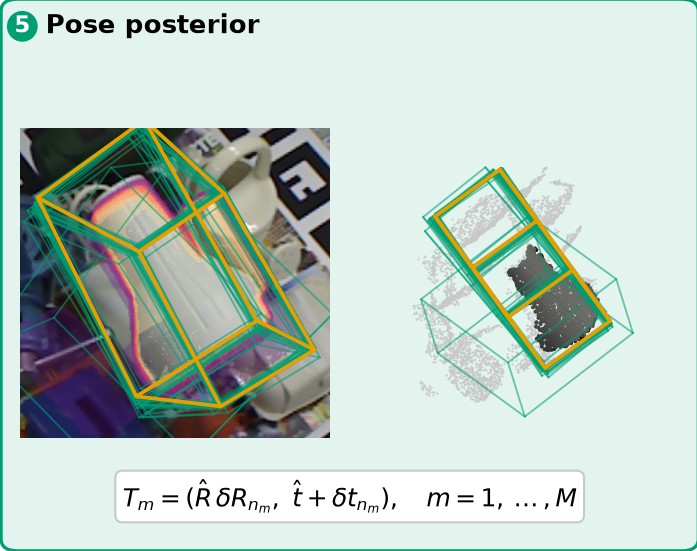
Sample
Sixteen poses the object could be in.
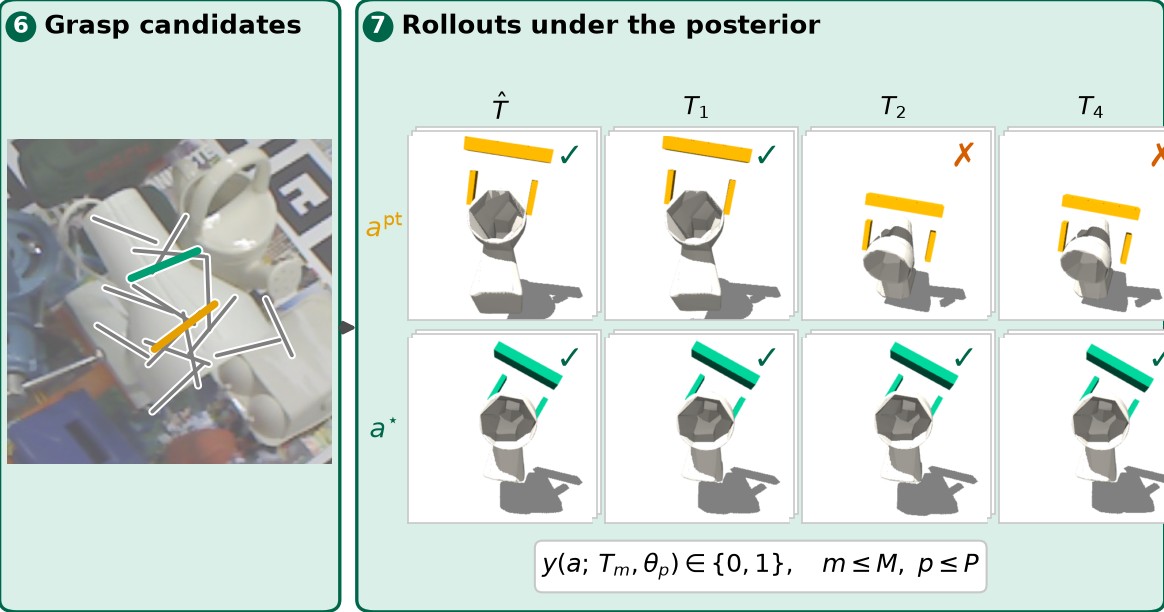
Roll out
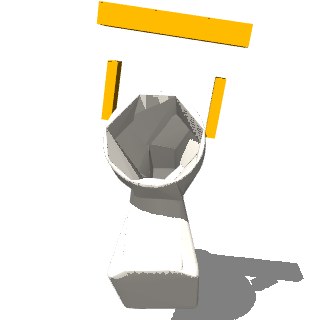
Every grasp at every pose, under four physics draws.
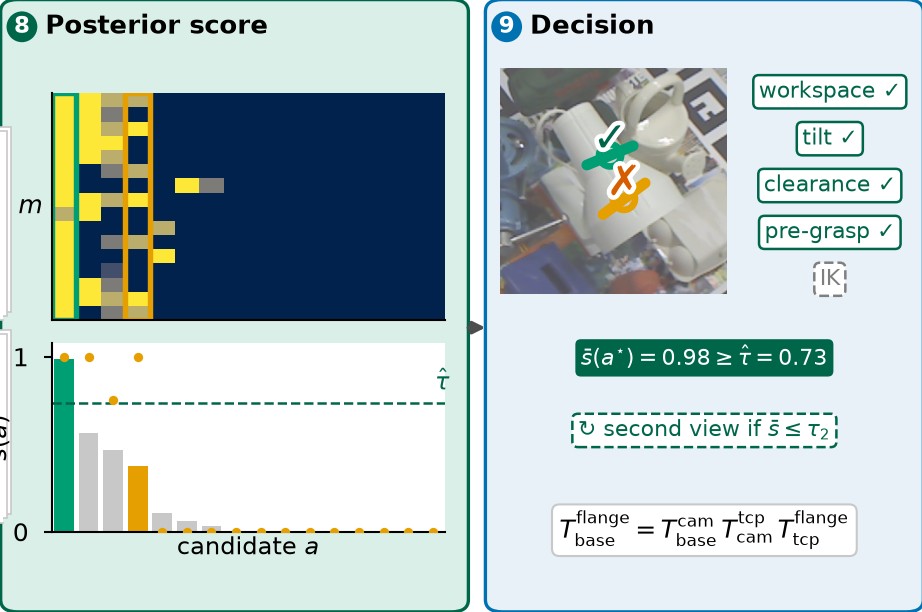
Decide
Act on the best grasp, certify it, or look again.
Every method,one table
| Method | n | Top-1 | AUC | Sel@25% | Cert. |
|---|---|---|---|---|---|
| Learned outcome scorers (no object model) | |||||
| Dex-Net 2.0 architecture | 5 | 0.637 ± 0.013 | 0.829 | 0.902 | 0.611 / 0.831 |
| RGB-D outcome scorer | 5 | 0.683 ± 0.006 | 0.876 | 0.929 | 0.647 / 0.857 |
| Deep ensemble of 5 | 3 | 0.705 ± 0.006 | 0.891 | 0.938 | 0.664 / 0.884 |
| Learned fusion with the planner score | |||||
| POISE (scorer + point score) | 5 | 0.821 ± 0.002 | 0.958 | 0.963 | 0.874 / 0.927 |
| POISE-U (scorer + posterior score) | 5 | 0.859 ± 0.002 | 0.988 | 0.985 | 0.851 / 0.972 |
| Pose-then-plan (mesh, simulator and physics prior at decision time) | |||||
| Pose regressor + planner | 5 | 0.707 ± 0.007 | 0.859 | 0.817 | – |
| FoundationPose + planner | 1 | 0.791 | 0.935 | 0.902 | 0.844 / 0.904 |
| FoundationPose + planner, 64 draws | 1 | 0.814 | 0.951 | 0.919 | – |
| Pose posterior (ours) | 1 | 0.859 | 0.987 | 0.988 | 0.849 / 0.972 |
| + second view (ours) | 1 | 0.865 | 0.993 | 0.997 | – |
| Privileged references | |||||
| Annotated pose + planner | 1 | 0.856 | 0.990 | 0.984 | 0.854 / 0.974 |
| Oracle (best candidate) | 1 | 0.877 | – | – | – |
Scenes and rollouts
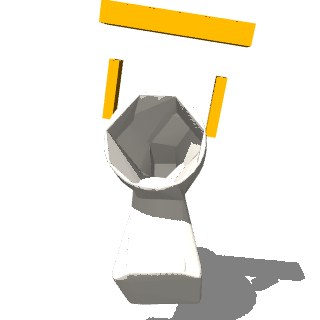
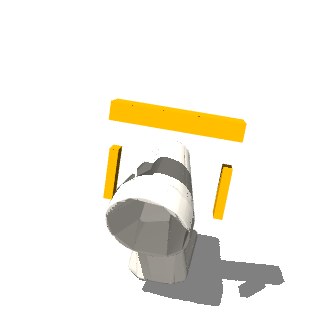
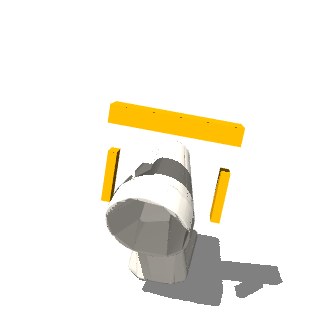
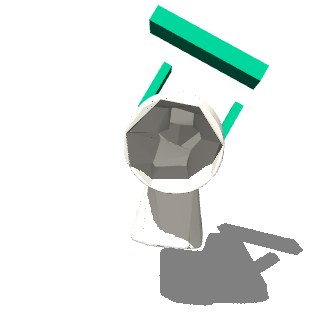
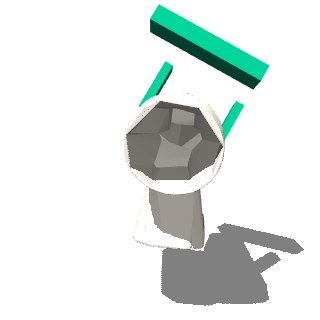
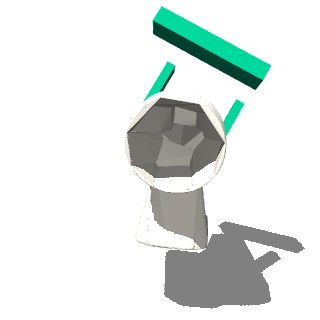
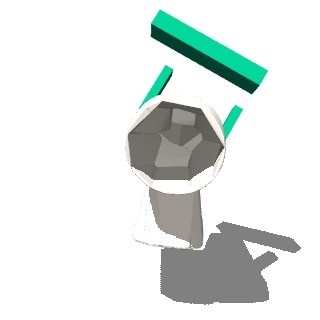
Estimates in orange, posterior samples in teal, annotations dashed. Renders are MuJoCo rollouts of the chosen grasps.